
To eliminate moss on roof shingles quickly and safely, clear loose moss and debris by hand or with a blower, then apply a zinc-based treatment during the damp fall season when moss absorbs it best. The moss dies within a few weeks, and winter rain gradually rinses it away without damaging shingles the way pressure washing can.
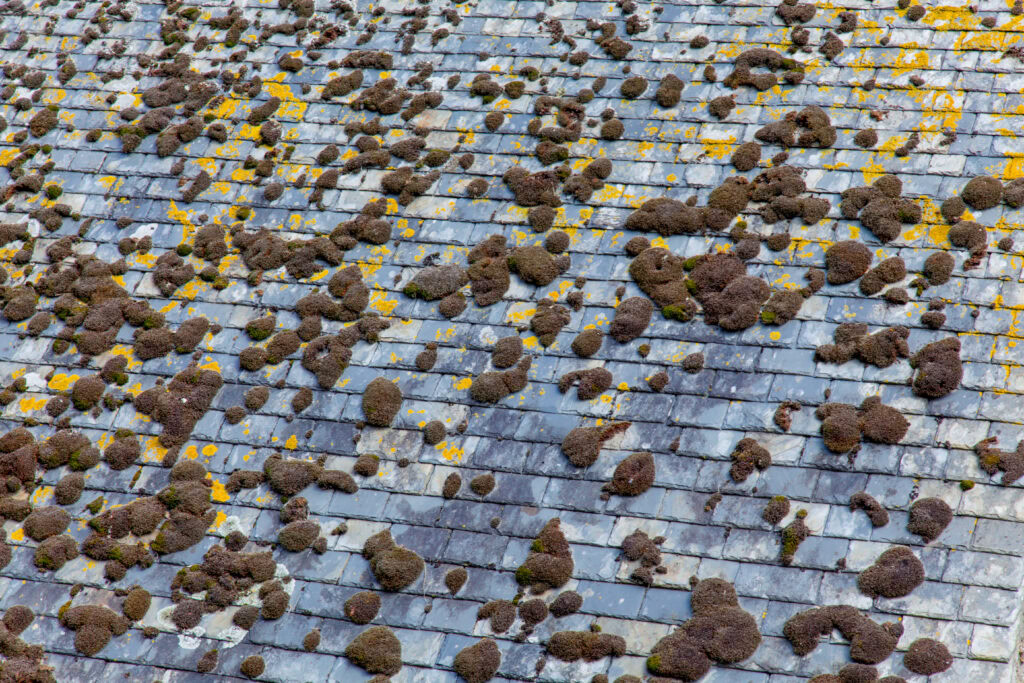
Have you ever looked up at your roof and noticed it turning green? In the Pacific Northwest, moss isn’t a question of if. It’s a question of when. Our mild temperatures, long rainy season, and towering evergreens create the perfect conditions for moss to settle in and spread across composition shingles.
Moss may look soft and harmless, but it’s a slow-moving threat. It traps moisture against your roof, lifts shingle edges, and sends debris into your gutters every time it rains. Left alone for a few seasons, it can shorten the life of your roof and lead to leaks that are far more expensive to fix than the moss itself.
The encouraging part is that late fall gives you a real advantage. This is the season when moss is actively growing and most receptive to treatment, which means you can knock it out efficiently with the right approach.
Here’s how to get rid of roof moss the smart way, without putting your shingles at risk.
Why Does Moss Thrive on Pacific Northwest Roofs?
Moss needs moisture and shade, plus a surface to grip, and Western Washington roofs supply all three. Months of rain keep shingles damp, while tall firs and cedars block the sunlight that would otherwise dry them out. North-facing roof slopes and sections under overhanging branches tend to grow moss first.
Shingles themselves give moss a foothold. The granular surface of composition shingles offers plenty of tiny ledges where spores can lodge, and the debris that collects on roofs feeds the growth. Once moss establishes itself, it holds water like a sponge and creates its own damp environment.
Neighboring trees add another layer to the problem. Needles and leaves that land on your roof hold moisture and break down into a thin layer of organic material, which gives moss even more to feed on. Roofs that never fully dry out between storms become ideal nurseries for new growth, and a few small patches can merge into a solid carpet within a couple of seasons.
That combination explains why moss can spread so quickly across neighborhoods in Kent and throughout King County.
Understanding why moss grows is the first step toward keeping it away.
How Does Moss Damage Shingles and Lead to Roof Rot?
Moss doesn’t have true roots. Instead, it anchors itself with root-like structures called rhizoids, which work their way into the gaps between shingles. As the moss grows thicker, it can lift shingle edges and create openings where wind-driven rain gets underneath.
Moisture is the bigger problem. A mat of moss stays wet long after a storm ends, keeping shingles and the wood beneath them damp for weeks. Over time, that constant moisture can lead to several serious issues:
- Lifted or curled shingle edges that let water slip beneath the roof surface.
- Loss of protective granules, which shortens the lifespan of your shingles.
- Soaked roof sheathing that softens and rots along the eaves and valleys.
- Clogged gutters as dead moss and debris wash off during storms.
- Added weight and drag on the roof surface when thick mats absorb rainwater.
The Oregon State University Extension Service explains in its guide to controlling roof moss and preventing long-term damage that moss management takes consistent effort, especially in wet climates like ours. Treating moss before it builds into thick mats is far easier than repairing the damage it leaves behind.
Moss also hides other problems. A thick mat can conceal cracked or missing shingles, failing flashing, or soft spots in the roof deck, which means damage can go unnoticed until water shows up inside. Clearing the moss gives you a chance to see the true condition of your roof.
The sooner you deal with moss, the less it can take from your roof.
Which Roof Shingle Moss Removal Method Is Safest?
Safe roof shingle moss removal starts with what you shouldn’t do. Pressure washing might seem like the fastest fix, but most roofers advise against it. High-pressure water strips protective granules from shingles, forces water underneath them, and can void parts of a manufacturer’s warranty. The roof may look clean for a moment, but it’s left more vulnerable than before.
A gentler approach works better and lasts longer. Here’s how the common methods compare:
| Method | How It Works | Risk to Shingles | Long-Term Results |
| Pressure washing | Blasts moss off with high-pressure water | High: strips granules and forces water under shingles | Moss returns quickly on damaged surface |
| Scraping alone | Removes surface growth by hand | Moderate: can tear brittle shingles | Leaves living rhizoids behind |
| Zinc soft wash treatment | Low-pressure application kills moss at the base | Low when applied properly | Moss dies and rinses away with rain |
| Zinc strips at the ridge | Rain carries zinc down the roof over time | Low | Helps slow regrowth |
Safety is another reason to leave the work to professionals. Moss-covered shingles are extremely slippery, especially when wet, and steep or two-story roofs add real fall risk. Trained technicians use the right footwear and equipment to work carefully without damaging the roof or themselves.
The most effective plan combines gentle cleaning with treatment. First, loose moss and debris come off with a brush and a blower. Then a zinc-based treatment goes on with low pressure, soaking into the remaining growth so it dies at the base.
Gentle and thorough beats fast and forceful every time.
Why Is Late Fall the Best Time for a Soft Wash Moss Treatment in Kent WA?
A soft wash moss treatment in Kent WA works best when the moss is moist and actively growing, and late fall delivers exactly that. Damp moss absorbs zinc treatments readily, which lets the product reach deeper into the growth. Product labels for zinc sulfate moss treatments specifically recommend applying just before fall rains begin or in early spring.
After treatment, the moss changes color and dies over the next three to four weeks. Then winter does the rest of the work for you. Steady rain gradually flushes the dead moss off the roof and into the gutters, with no scraping or blasting required.
To get the most from your treatment, keep these tips in mind:
- Schedule treatment during a short dry window so the product can settle before heavy rain.
- Plan a gutter cleaning a few weeks later to catch the dead moss as it washes off.
- Trim back overhanging branches to let more sunlight and air reach the roof.
- Consider an annual maintenance treatment to stop new growth before it spreads.
Following up with gutter cleaning is especially important, since the dead moss has to go somewhere when it rinses off your roof.
Treat it in fall, and let the winter rain finish the job.
How Can Quick and Clear Services Help You Eliminate Roof Moss for Good?
We’ve been protecting roofs across South King and parts of Pierce County since 1999. As a family-owned company based in Renton, we know exactly how fast moss can take over a Pacific Northwest roof.
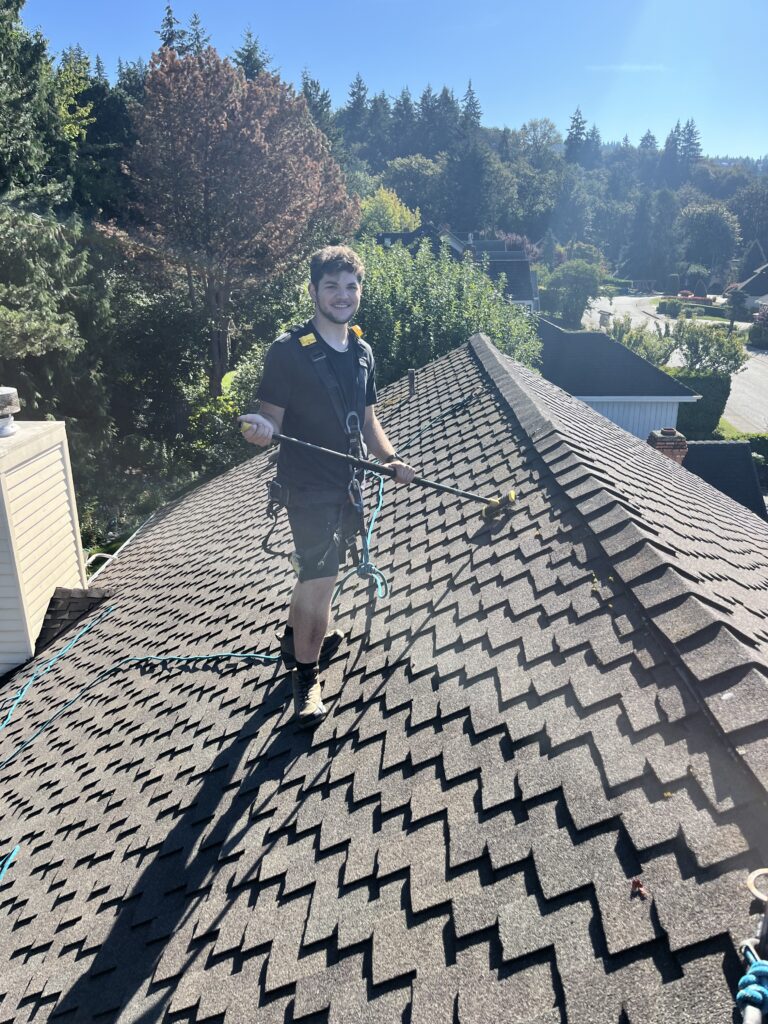
Our roof moss control and roof cleaning services start by brushing and blowing built-up moss and debris off your roof. Then we treat the remaining growth with zinc sulfate, so it dies and washes away naturally with the rain. We never pressure wash roofs, because we want your shingles to last as long as possible.
We can pair your moss treatment with gutter cleaning and set you up on a recurring maintenance schedule, so your roof stays clean year after year. We’re licensed and bonded, with full insurance coverage, and our trained technicians treat your home with care.
We’ll keep your roof clear so you never have to climb up there yourself.
How Can You Prevent Roof Rot in King County Long Term?
To prevent roof rot in King County, you need more than a one-time cleaning. Moss will always find its way back in our climate, so the real goal is to manage it before it grows thick enough to hold moisture against your shingles.
A yearly routine of gentle debris removal, timely zinc treatment, and clear gutters keeps your roof dry and doing its job for years longer. That small investment each fall protects one of the most expensive parts of your home.
Stay ahead of the moss, and your roof will stay ahead of the weather.